
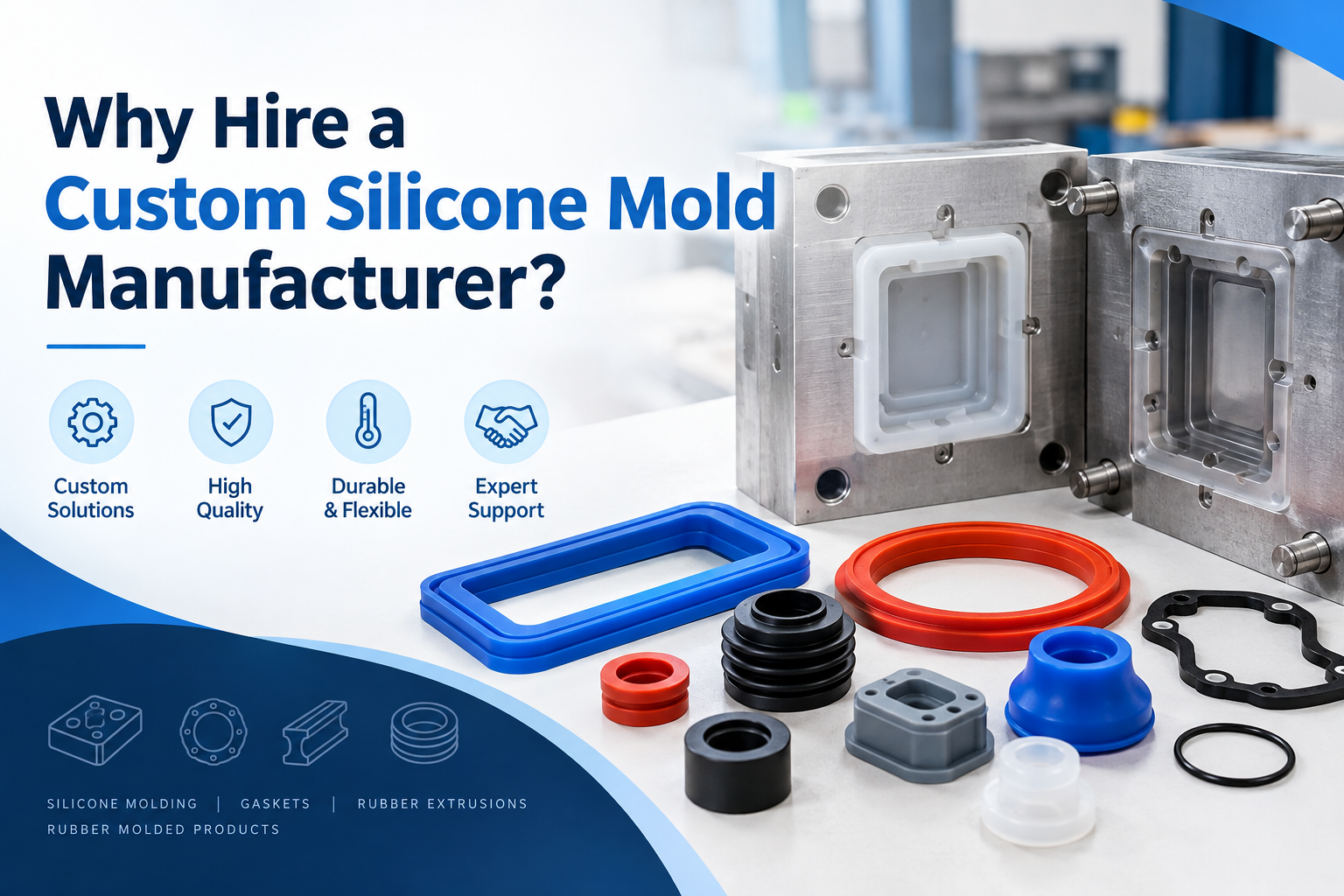
Choosing the right custom silicone mold manufacturer can make a big difference in the quality, performance, and consistency of your products. Whether you need silicone seals, flexible components, industrial gaskets, or specially designed molded parts, working with an experienced manufacturer can help you find a solution that meets your requirements. Custom manufacturing is especially useful when standard products do not fit your design, operating conditions, or production needs.
Silicone and rubber components are widely used in automotive, medical equipment, electronics, food processing, industrial machinery, and many other applications. Each industry has different requirements for flexibility, temperature resistance, dimensions, and durability. A reliable manufacturing partner can help you select suitable materials, develop the right mold, and produce components according to your specifications.
In this guide, we explain the benefits of hiring a custom silicone mold manufacturer, what to consider before choosing one, and how related products such as custom gaskets, rubber extrusions, and rubber molded products can support your business.
1. What Does a Custom Silicone Mold Manufacturer Do?
A custom silicone mold manufacturer produces molds and molded silicone parts according to a customer's design and application requirements. Instead of relying on standard shapes and sizes, businesses can request components with specific dimensions, shapes, hardness levels, and performance characteristics.
The process usually starts with understanding the product's purpose. The manufacturer reviews drawings, samples, dimensions, material requirements, and expected operating conditions. Based on these details, the team can recommend a suitable molding process and develop a mold for production.
Custom silicone molding is useful for producing items such as seals, grommets, protective covers, flexible connectors, and specialized industrial components.
A manufacturer with suitable design and production capabilities can also help identify potential issues before full production begins. This may reduce material waste, improve product consistency, and make the manufacturing process more efficient.
2. Why Hire a Custom Silicone Mold Manufacturer?
Get Products Designed for Your Requirements
One of the main benefits of custom manufacturing is flexibility. Standard components may not fit every application, particularly when equipment has unusual dimensions or specific sealing requirements.
A custom silicone mold manufacturer can develop components based on your drawings, samples, or technical specifications. You can discuss the required shape, dimensions, material hardness, and other important characteristics before production begins.
This approach is helpful for businesses that need specialized parts rather than general-purpose products.
Improve Product Quality and Consistency
Product consistency matters when components are used in machinery, equipment, or assembled products. Differences in dimensions, material properties, or surface finish can affect how well a component fits and performs.
A capable manufacturer should use suitable production controls, inspection methods, and clearly defined specifications to maintain consistent quality across batches.
Before placing an order, ask about dimensional inspection, material verification, sample approval, and quality documentation. These details help you understand how the manufacturer checks whether the finished components meet your requirements.
Choose Suitable Silicone Materials
Not all silicone materials perform in the same way. The correct choice depends on the environment in which the component will operate.
For example, some applications require flexibility at low or high temperatures, while others need resistance to moisture, weathering, or repeated compression. If the component will contact food, medical equipment, or other regulated environments, the material may also need to meet specific applicable requirements.
An experienced manufacturer can help you compare material options based on the intended application. Always confirm the relevant material grade and compliance documentation instead of assuming every silicone product has the same properties.
Support Prototyping and Product Development
If you are developing a new product, testing a prototype before mass production can help identify design problems early.
A manufacturer may be able to review your design, produce sample parts, and suggest changes to improve fit or manufacturability. For example, adjustments to wall thickness, parting lines, or mold design may help reduce production difficulties.
Discuss prototype availability, tooling costs, lead times, and sample approval before beginning a project. These steps help you make more informed decisions and avoid unnecessary changes later.
3. How to Choose the Right Silicone Molding Manufacturer
Finding a suitable silicone molding manufacturer requires more than comparing prices. You should consider technical capabilities, material knowledge, quality controls, communication, and production capacity.
Here are some important points to check:
- Manufacturing experience: Look for relevant experience with components similar to yours.
- Design support: Confirm whether the company can review technical drawings and recommend design improvements.
- Material options: Ask which silicone grades and hardness levels are available for your application.
- Quality control: Understand how dimensions, material properties, and finished parts are inspected.
- Production capacity: Check whether the manufacturer can support your expected order quantities and future demand.
- Communication: Choose a supplier that clearly explains specifications, pricing, tooling, and delivery expectations.
Requesting a quotation from more than one qualified manufacturer can help you compare the complete value of each offer. A lower initial price may not always be the most economical choice if tooling, quality, or production requirements are not adequately addressed.
4. When Do You Need a Custom Gasket Manufacturer?
Gaskets are important for creating seals between two connected surfaces. They help prevent the unwanted movement of liquids, gases, dust, or other substances, depending on the application and sealing design.
A custom gasket manufacturer can produce gaskets to match specific dimensions, shapes, thicknesses, and material requirements. This is useful when standard gaskets do not provide the required fit or sealing performance.
The right gasket depends on several factors, including operating temperature, pressure, the type of fluid or gas involved, surface conditions, and compression requirements.
For example, industrial machinery may require gaskets that withstand repeated compression, while automotive equipment may need components designed for exposure to oils, vibration, or changing temperatures.
Before ordering custom gaskets, share the application details and technical specifications with the manufacturer. Ask whether the proposed material is suitable for the operating conditions and whether testing is recommended.
Choosing the right material and dimensions can help improve sealing performance and reduce the risk of premature failure.
5. What Are Custom Rubber Extrusions Used For?
Custom rubber extrusions are manufactured by pushing rubber material through a specially designed die to create a continuous profile. These profiles can then be cut to the required lengths or prepared for further processing.
They are commonly used for seals, edge trims, protective strips, weather seals, tubing, and industrial profiles.
Businesses often choose custom rubber extrusions when they need a specific cross-sectional shape that is not available in standard products. The profile can be designed around the intended fit, sealing function, and installation method.
Material selection is important because different rubber compounds offer different levels of flexibility, weather resistance, chemical resistance, and temperature performance.
When selecting a supplier, provide a drawing or sample of the required profile, along with the operating environment and expected quantities. Ask about tooling requirements, dimensional tolerances, available compounds, and production lead times.
Although rubber extrusion and silicone molding are different manufacturing processes, both can help businesses obtain components that match their product designs.
6. Benefits of Custom Rubber Molded Products
Rubber molded products are manufactured by shaping rubber within a mold. The process can produce complex shapes and functional components that are difficult to make using simple cutting or extrusion methods.
Common examples include rubber grommets, vibration-control parts, protective covers, seals, bumpers, and specialized industrial components.
Custom molded parts can offer several benefits:
- Application-specific design: Parts can be made to match the dimensions and function of a particular product.
- Material flexibility: Different rubber compounds can be considered according to the operating environment.
- Complex shapes: Molding can accommodate designs with features that are difficult to produce using other methods.
- Repeatable production: Appropriate tooling and process controls can support consistent manufacturing.
- Multiple industry applications: Molded rubber parts are used in automotive systems, machinery, electrical equipment, and many other products.
The best manufacturing method depends on the component's geometry, material, quantity, and performance requirements. Molding may be suitable for individual shaped parts, while extrusion is often more appropriate for continuous profiles.
Discussing these factors with a manufacturer can help you select a practical production method for your project.
7. What Should You Check Before Placing an Order?
Before choosing a supplier, prepare the information needed for an accurate quotation. This helps the manufacturer understand your expectations and reduces the possibility of misunderstandings.
Consider providing the following details:
- Product drawings or samples: Include dimensions and important tolerances.
- Application details: Explain where and how the component will be used.
- Material requirements: Specify any known requirements for hardness, temperature, chemicals, or regulatory compliance.
- Order quantity: Share your prototype, initial production, and expected ongoing volumes.
- Quality requirements: Mention inspection needs, testing, certificates, and documentation.
- Delivery expectations: Discuss tooling time, sample approval, production schedules, and shipping.
You should also request a clear quotation that separates tooling costs from part prices where applicable. Ask about minimum order quantities, mold ownership, maintenance, and the process for handling future design changes.
A well-defined project brief makes it easier to compare suppliers and choose a manufacturing partner that fits your technical and commercial needs.
Conclusion
Hiring a custom silicone mold manufacturer can help your business develop components that fit specific designs and operating requirements. From material selection and mold development to sample approval and production quality, the right manufacturing partner can support a more organized product development process.
Whether you need silicone-molded components, a custom gasket manufacturer, custom rubber extrusions, or other rubber molded products, focus on application suitability, manufacturing capabilities, quality controls, and clear communication.
Before making a final decision, share your requirements with potential suppliers and request technical recommendations and a detailed quotation. This will help you understand your options and select components that meet your project's needs.
Frequently Asked Questions (FAQs)
1. What does a custom silicone mold manufacturer produce?
A custom silicone mold manufacturer produces molds and silicone components designed for specific applications. Products may include seals, grommets, flexible covers, connectors, and specialized industrial parts.
2. How do I choose a reliable silicone molding manufacturer?
Review the manufacturer's relevant experience, material options, design support, quality inspection methods, production capacity, and communication. Request samples or technical documentation when appropriate.
3. Are custom silicone molds suitable for industrial applications?
Yes. Custom silicone molds can be used to produce components for many industrial applications. Suitability depends on the silicone grade, component design, operating environment, and required performance.
4. What is the difference between rubber molding and rubber extrusion?
Rubber molding shapes material inside a mold to create individual components. Rubber extrusion pushes material through a die to create continuous profiles, which can then be cut to the required length.
5. When should I contact a custom gasket manufacturer?
Contact a custom gasket manufacturer when standard gasket sizes or materials do not meet your sealing requirements. Provide the required dimensions, operating conditions, and material specifications.
6. What information is needed for a custom rubber parts quotation?
Manufacturers generally need drawings or samples, material requirements, dimensions, tolerances, order quantities, application details, and delivery expectations to prepare a useful quotation.
7. Can custom rubber molded products be made in different materials?
Yes. Depending on the design and application, manufacturers may offer different rubber compounds and silicone materials. The best option depends on factors such as temperature, flexibility, chemical exposure, and required service life.